

Last updated: May 2026
Heat pump clothes dryers are showing up in more Canadian laundry rooms because they do not need a wall vent, they reuse heat in a closed loop, and certified models use far less electricity than a traditional electric dryer. If you are comparing models or you already own one, a simple maintenance routine matters as much as it does for a vented dryer, but the parts you clean are different.
This guide explains how heat pump dryers work, how they compare to vented and basic condenser dryers, and how to avoid the long dry times and error codes that often trace back to skipped cleaning. When a heat exchanger, sensor, or compressor issue is involved, dryer repair from a trained technician is the safest next step.
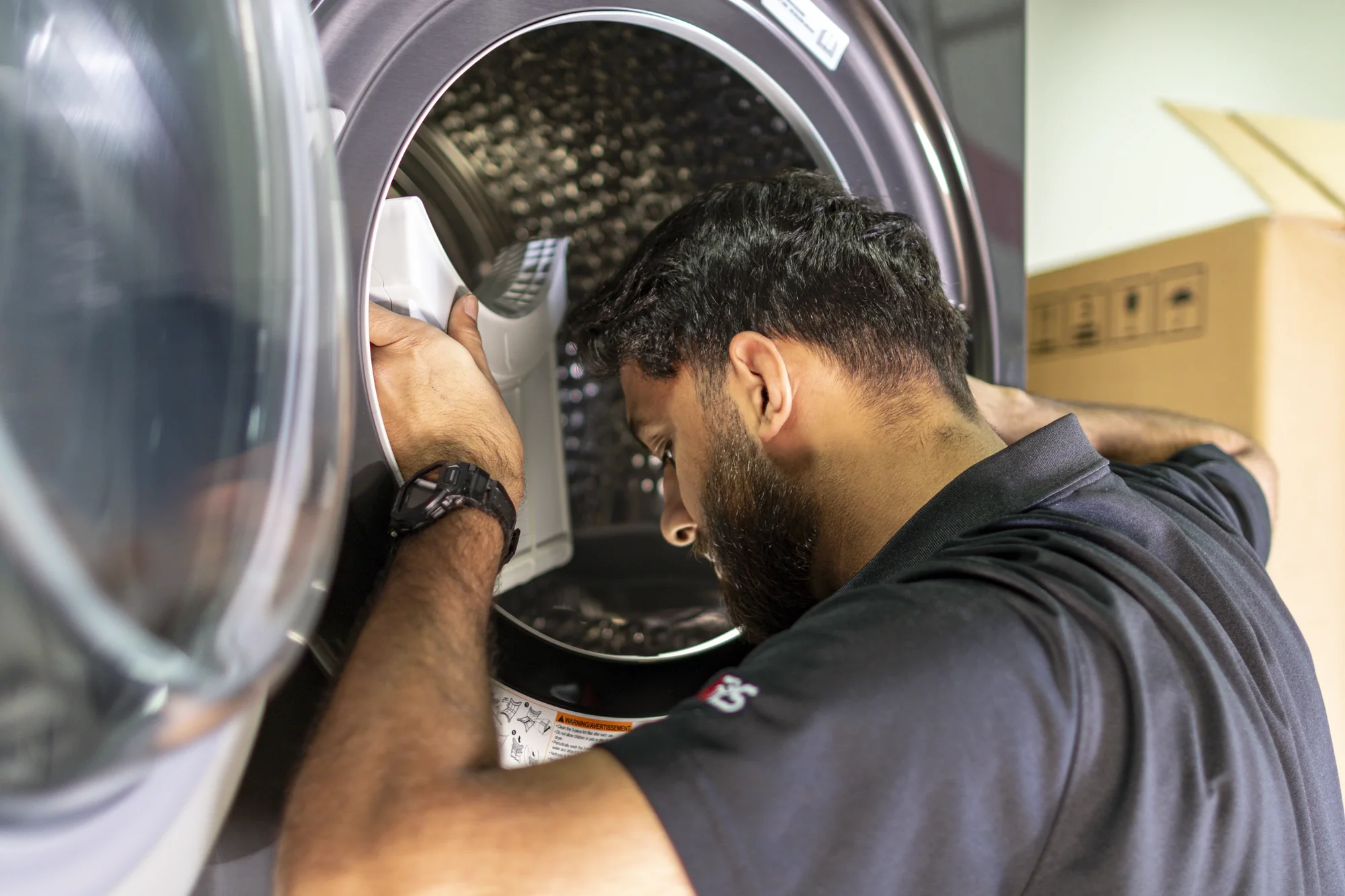
What is a heat pump clothes dryer?
A heat pump dryer still tumbles laundry while air moves through the drum, but it does not send a stream of hot air out a vent. Instead, the appliance cools humid air so moisture condenses out, drains or collects that water, then reheats the returning air and sends it back through the load. The “heat pump” part is the refrigeration cycle that moves heat efficiently instead of only making new heat with a large resistor coil on every cycle.
According to ENERGY STAR, certified heat pump dryers use about 70 per cent less energy than conventional electric dryers and can save more than five hundred dollars in electricity over the life of the product, depending on local rates and how often you run loads. Typical dry times for certified models are often between 37 and 70 minutes, and fabrics see lower temperatures than many vented designs, which can reduce wear on delicate items.
Vented dryer vs condenser vs heat pump
Use this table to see how common residential types differ at a glance. Your user manual remains the final word for installation and clearances.
| Dryer type | Vent to outdoors | Typical energy use | Moisture in the room | Maintenance focus |
|---|---|---|---|---|
| Vented (electric or gas) | Yes | Higher on electric models | Exhaust goes outside | Lint screen, duct, exterior hood |
| Condenser (ventless, not heat pump) | No | Moderate | Some latent heat and humidity at the unit | Condensate path, lint and air filters |
| Heat pump (ventless) | No | Lower on certified models | Less heat dumped into the room than many vented units | Lint screen, secondary filters, heat exchanger or condenser cleaning, condensate drain or tank |
Heat pump models are especially common where punching a new vent is costly or not allowed, for example dense urban homes, stacked closets, and some multi-unit buildings. You may need a nearby drain for pumped condensate, or you may empty a reservoir by hand, depending on the model (ENERGY STAR overview).
Maintenance checklist for heat pump dryers
Lint and fine fibres still exist; they just get managed inside the cabinet instead of blowing out a vent. Skipping cleaning is the usual reason owners see very long cycles, weak heating, or repeated sensor faults.
- Every load: Clean the primary lint filter completely. A thin film of softener residue can slow airflow, so wash the filter with mild soap and water on a schedule your manual suggests (similar idea to the lint screen care in our dryer maintenance tips article).
- Monthly (or sooner if the manual says so): Access and clean the secondary lint filter, heat exchanger, or condenser path exactly as the manufacturer describes. Some units use a flip-out exchanger you rinse in a sink; others use fixed fin packs you vacuum gently.
- Condensate: If the machine uses a tank, empty it before it triggers a pause. If it is plumbed, confirm the hose has no kinks and the lift height stays within the manual limit so the pump is not overloaded.
- Airflow around the appliance: Leave the door and service panels unobstructed. Tight closets need the clearances listed in the install guide so the fan and refrigeration parts stay within a safe temperature range.
- Deep cleaning: A yearly pass that hits areas you cannot see every month still helps. Our how to deep clean your dryer guide is written mainly for vented dryers, but the habits (unplug before service, vacuum carefully, avoid damaging wires) still apply if your manual allows owner access to boot areas.
If cycles suddenly take much longer, start with filters and the exchanger, then review the troubleshooting section of the manual. Many symptoms overlap with the ventless notes in our dryer is not drying guide.
Signs you may need professional service
Heat pump dryers add refrigeration components, sensors, and pumps that are not part of a basic vented electric design. Call a qualified appliance technician if you notice any of the following:
- Error codes that return right after you clean filters and the exchanger
- Loud buzzing, grinding, or rattling that matches compressor or fan failure
- Water on the floor that is not explained by a full tank or a loose drain hose
- Burning smell, repeated tripped breakers, or visible wiring damage (unplug the unit and do not run it)
ARS technicians diagnose control boards, thermistors, heating helpers, pumps, and airflow problems on major brands across Ontario. If you are unsure whether the issue is user serviceable, schedule service or contact us before opening sealed refrigeration areas, which can void warranty coverage and release refrigerant if lines are disturbed.
Buying and installation notes
- Electrical: Many full-size heat pump dryers still need a 240 V circuit like other large laundry equipment. Confirm breaker size and receptacle type with the retailer sheet before delivery.
- Drain: Decide during purchase whether you will use a gravity drain, a pumped run to a laundry sink, or manual tank emptying.
- Space and sound: Heat pump dryers can be slightly heavier and may run longer on some mixed loads than an old vented workhorse. Read independent reviews for noise and vibration in your floor type.
Rebates and efficiency programs change by province, utility, and season. When you shop, ask the retailer for current eligible incentives and keep the ENERGY STAR model list in mind if you want the efficiency numbers above to apply to your shortlist (ENERGY STAR Product Finder for dryers).
Frequently asked questions
Are heat pump dryers safe without a vent?
They are designed to operate ventless, but you still need regular lint and exchanger maintenance and respect for electrical and condensate requirements. For fire safety habits with laundry in general, the NFPA clothes dryer safety tip sheet remains a useful reference for lint control and installation discipline.
Why does my heat pump dryer take so long?
The most common cause is restricted internal airflow from a full lint filter, packed secondary filter, or clogged heat exchanger. Less often, a sensor or control fault misreads dryness and adds unnecessary extension time.
Can ARS repair heat pump dryers?
Yes. We service major residential brands. Bring the model tag when you book so we can align parts and test procedures with your exact unit.
Need help with dryer performance? Book dryer repair with ARS Repairs Inc. for diagnosis, genuine parts options, and warranty-backed workmanship across our Ontario service areas. Book dryer service Call 1-866-415-3937