

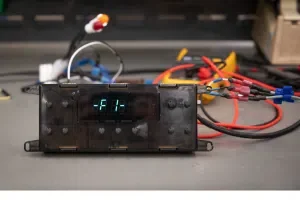
The F1 code on many electric ranges points to the electronic control system. It often relates to the oven temperature sensor, wiring, or the main control board.
ARS sees these calls often. Below is a practical overview of causes and safe first steps, plus when to book a technician.
Types of Appliances Affected and Causes of the F1 Error Code
The “F1” error code is primarily encountered in electric kitchen ranges, including both freestanding and built-in models. This error typically indicates a malfunction within the appliance’s electronic control system, which governs various functions such as temperature regulation, timer settings, and oven operation.
There are several potential causes behind the occurrence of the “F1” error code:
Oven Temperature Sensor Malfunction
One common culprit behind the “F1” error is a faulty oven temperature sensor. This sensor is responsible for monitoring the internal temperature of the oven cavity and relaying this information to the electronic control board. If the sensor becomes damaged or fails to provide accurate readings, it can trigger the “F1” error code as a safety precaution.
Electronic Control Board Failure
The electronic control board serves as the brain of the electric range, coordinating the operation of various components and interpreting user commands. If the control board experiences a malfunction due to electrical issues, circuitry damage, or component failure, it may generate the “F1” error code as a signal of the underlying problem.
Wiring or Connection Issues
Loose or damaged wiring connections between the oven components and the electronic control board can also contribute to the occurrence of the “F1” error code. Electrical disturbances, such as power surges or fluctuations, can further exacerbate these issues, leading to erratic behavior and error code display.
Environmental Factors
Extreme temperatures, humidity, or exposure to moisture in the kitchen environment can affect the performance and reliability of electronic components in the electric range. Over time, these environmental factors may contribute to the degradation of wiring, circuitry, or sensor components, increasing the likelihood of error code occurrence.
Wear and Tear
Like any mechanical or electronic device, kitchen appliances are subject to wear and tear over time. Continuous use, frequent temperature fluctuations, and mechanical stresses can take their toll on critical components, potentially leading to malfunctions and error code displays.
Understanding what F1 usually means helps you troubleshoot without guessing. The sections below cover typical causes, simple resets, and when DIY should stop.
DIY fixes for the F1 error code
Try these steps only if you can work safely around electricity. If F1 returns after a reset, stop and book service.
Check power supply
Begin by ensuring that the electric range is properly connected to a stable power source. Verify that the power cord is securely plugged into the outlet and that there are no visible signs of damage or wear. If the range is connected to a circuit breaker, check for any tripped breakers and reset them if necessary.
Perform a Hard Reset
Sometimes, electrical glitches or temporary malfunctions can trigger the “F1” error code. Try performing a hard reset by unplugging the range from the power source for approximately 5-10 minutes. This action can help reset the appliance’s internal electronics and clear any error codes stored in the system memory.
Inspect Oven Temperature Sensor
The oven temperature sensor, also known as the thermostat probe, monitors the internal temperature of the oven cavity and communicates this information to the electronic control board. Locate the temperature sensor, typically positioned inside the oven near the top or back wall. Check for any visible signs of damage, such as frayed wires or corrosion. If the sensor appears faulty or damaged, it may need to be replaced.
Clean Control Panel and Connections
Over time, dirt, grease, or debris may accumulate on the control panel and wiring connections, potentially causing electrical issues or poor connectivity. Use a soft, dry cloth to clean the control panel and inspect the wiring connections for any signs of corrosion or oxidation. Ensure that all connections are secure and tight.
Perform Diagnostic Tests
Some electric ranges feature diagnostic modes or self-diagnostic capabilities that can help identify the root cause of error codes such as “F1.” Consult the appliance’s owner’s manual or user guide for instructions on accessing and interpreting diagnostic codes. Follow the prescribed steps to run diagnostic tests and troubleshoot the issue further.
Consult Manufacturer Resources
Manufacturers often provide troubleshooting guides, technical support hotlines, and online resources for troubleshooting common appliance issues. Visit the manufacturer’s website or contact their customer support team for additional guidance and assistance specific to your appliance model.
Safety first. If you are not comfortable around line voltage, or the code returns after a reset, stop and call a certified technician.
Professional repair is often the right choice when the board, harness, or sensor needs bench-level testing.
Why choose professional repair for F1 faults
Technicians train on live voltage, OEM parts, and manufacturer test procedures. That reduces repeat failures and avoids warranty issues from improvised fixes.
ARS uses genuine parts where specified, documents the fault, and stands behind the completed repair.
More range and oven error code guides
- Fixing the F3 error code: low oven temperature and sensor faults
- Samsung oven error codes: common codes and what they mean
- Can an oven thermostat be repaired?: when sensor or control issues need a pro
Conclusion
F1 is a signal, not a diagnosis by itself. Start with power, connections, and a clean, intact oven sensor. If the fault persists, a pro can separate board failure from wiring or sensor drift.
Contact ARS when you need a clear diagnosis and a repair plan you can trust.
ARS Appliance Repair Service has been trusted across Toronto, Ottawa, and Southern Ontario for over a decade. Our licensed, manufacturer-authorized technicians specialize in repairing all major household and commercial appliances with genuine parts and warranty-backed service. From refrigerators and washers to ovens, dishwashers, and more, we restore appliances quickly, professionally, and correctly the first time, earning the confidence of homeowners and businesses throughout the region.